Last updated October 15, 2026







Free written scope consultation - allowances, timeline, and change-order rules on paper before a single trade is scheduled
General Contractor Maintenance Checklist for Orlando Homeowners
A kitchen backsplash installed correctly in January can show grout failure by August if nobody accounts for Orlando’s average indoor humidity swings. That’s not a workmanship problem. It’s a climate problem, and most maintenance checklists skip it entirely because they were written for Ohio basements and Colorado snow loads, then imported wholesale to Florida. This guide replaces the generic advice with a month-by-month maintenance plan built around what Orlando’s actual weather does to a finished remodel: intense UV, relentless humidity, afternoon thunderstorms, and a hurricane season that runs from June through November. We’ll cover material degradation timelines, storm inspection steps you can do yourself, the insurance failures that cost homeowners real money, and what to demand from your contractor at the one-year walkthrough.
Styles & brands we work with




Quick Answer
A practical Orlando home maintenance checklist means scheduling specific tasks by month: January for grout and caulk inspection after holiday hosting, March for AC drain line flushing and roof inspection before storm season, May for hurricane strap and soffit vent checks, August for interior humidity monitoring and window seal inspection, and October for exterior paint touch-ups after peak UV exposure. Plan on spending roughly $800 to $1,400 per year on preventive maintenance for a 2,000-square-foot Orlando home, with the largest single expense being exterior paint touch-ups every 24 to 36 months.
Table of Contents
- January: Post-Holiday Grout, Caulk, and Cabinet Inspection
- March: Pre-Storm-Season Roof and Drainage Check
- May: Hurricane Strap and Soffit Vent Self-Inspection
- August: Humidity, Window Seals, and Interior Air Quality
- October: Post-UV Exterior Paint and Hardscape Review
- Materials That Fail Fastest in Central Florida (And Their Replacement Intervals)
- The Three Maintenance Failures That Void Orlando Insurance Claims
- Your One-Year Post-Project Contractor Walkthrough: What to Demand in Writing
- Common Mistakes to Avoid
- When to Call a Professional
- Frequently Asked Questions
- The Bottom Line
January: Post-Holiday Grout, Caulk, and Cabinet Inspection
January in Orlando is the driest month of the year, with average relative humidity finally dipping below 60 percent. That’s the ideal time to inspect every interior seam, joint, and seal before spring humidity returns in force. Our crews have walked into Orlando homes in January and found cracked grout lines that were invisible three months earlier, because swollen materials finally contracted enough to reveal the damage.
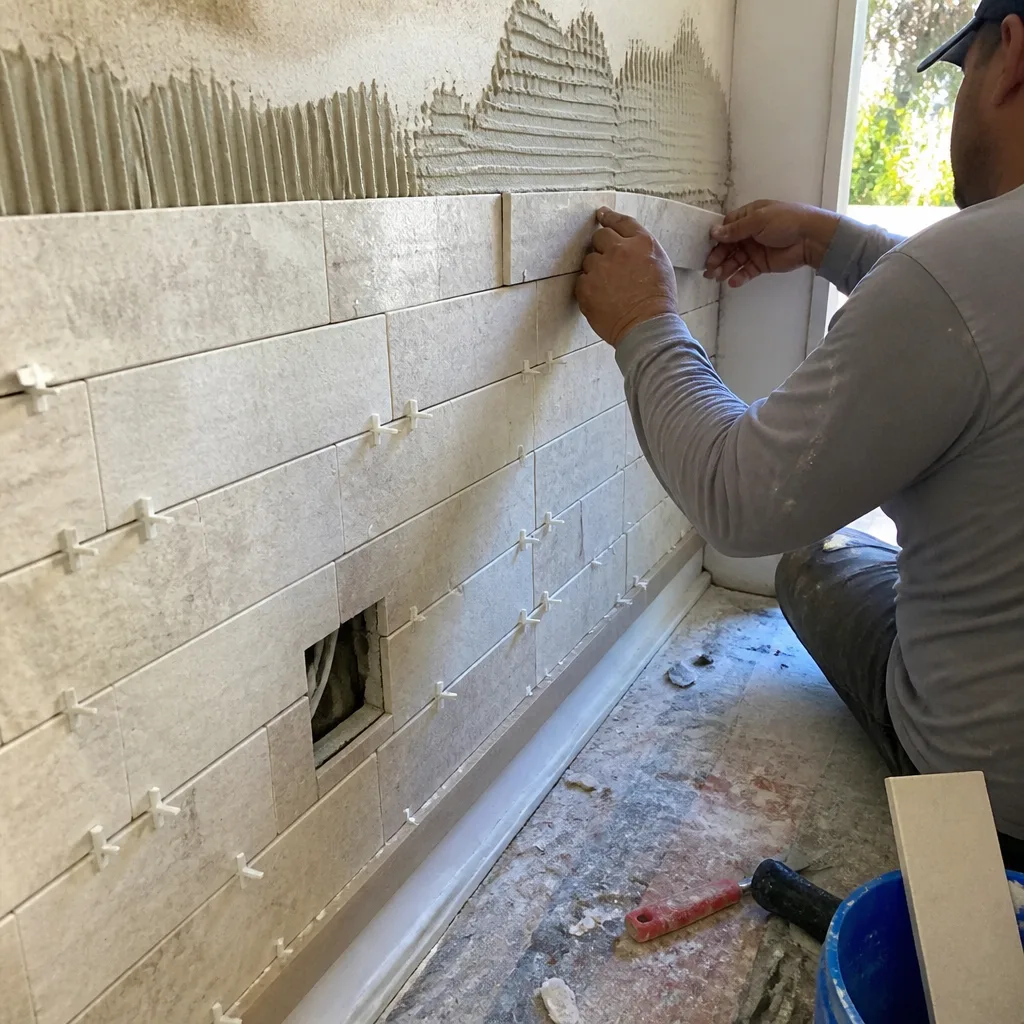
Start with tile grout in kitchens, bathrooms, and laundry rooms. Orlando’s humidity causes grout to absorb moisture and expand during summer, then contract during winter’s drier air. That cycle is what causes hairline cracking, and those cracks are where water intrusion begins in March and April when afternoon thunderstorms return. Look at the grout lines around the sink, the cooktop backsplash, and the shower floor. If you can catch a fingernail in a crack, it needs repair before spring. Epoxy-based grout handles Orlando’s expansion cycle far better than cement-based grout, which is why we specify epoxy for wet-area installations in every Bathroom Remodeling in Orlando project.
Next, inspect caulk lines around tubs, shower pans, sinks, and countertop-to-backsplash joints. Silicone caulk in Orlando typically lasts 3 to 5 years before it begins pulling away from the surface. When caulk fails, water wicks behind it into drywall and cabinetry, and that’s when you get soft spots, mold, and the faint musty smell that’s so common in older Orlando homes. Spend $60 to $90 on high-quality silicone caulk and an afternoon redoing every wet-area seam. It’s the cheapest insurance you’ll buy all year.
Finally, run your hand along cabinet doors and drawer fronts in the kitchen and baths. Orlando’s humidity swings make solid wood cabinet doors expand and contract measurably. A door that fit fine in August may bind in January. Adjust hinge screws by a quarter turn where needed. If the binding persists, check whether the cabinet face frame has absorbed moisture somewhere, often near the dishwasher or sink base. Catching a small water leak at the sink base in January prevents a $1,500 to $4,000 cabinet replacement in July.
March: Pre-Storm-Season Roof and Drainage Check
March is the single most important maintenance month for Orlando homeowners. Hurricane season starts June 1, which means March is your last reliable window for roof repairs and drainage improvements before the daily afternoon storms begin. Roofers in the Orlando metro area book out four to eight weeks in advance by mid-April, so waiting until May to discover a loose shingle means you may not get it fixed before the first named storm.
Inspect your roof from the ground with binoculars. Walk the perimeter of the house and look for missing or curling shingles, damaged flashing around pipes and vents, and any area where the shingle granule surface looks thin or bare. Orlando’s UV index averages between 8 and 11 from March through September, which means asphalt shingle roofs here age approximately 20 to 30 percent faster than the same shingle in a northern climate. A roof rated for 30 years in Ohio may realistically deliver 20 to 22 years in Orlando. If your shingles are curling at the edges or you can see fiberglass matting showing through, schedule a professional inspection. Any General Contractor in Orlando can provide a written roof assessment, or you can call us directly.
Next, clean and inspect your gutters and downspouts. Orlando receives an average of 51 inches of rain per year, with the bulk of it arriving between June and September. Clogged gutters during those months don’t just cause overflowing water at the roofline. They allow water to pool against the foundation and soak into the fascia boards, and that’s how you get $800 to $2,500 in fascia and soffit repair. Remove debris by hand, flush the downspouts with a garden hose, and confirm water flows away from the foundation at every downspout exit. If water pools within 3 feet of the slab, add a downspout extension. The $40 extension prevents the $8,000 foundation issue.
Flush your AC condensate drain line now. Orlando air conditioners run hard from April through October, and the drain line accumulates algae and sludge that causes backups. A backed-up drain line spills water into the air handler closet or across the ceiling below, and that water damage is frequently excluded from homeowner’s insurance because it’s considered a maintenance failure. Pour a cup of white vinegar or a commercial drain line treatment into the line every 90 days, and check the drip pan under the air handler for standing water.
May: Hurricane Strap and Soffit Vent Self-Inspection
By May, hurricane season is a month away. This is the time for the structural checks that every generic checklist omits: hurricane straps, soffit vents, and roof-to-wall connections. These are the components that determine whether your roof stays attached to your house in 90-mile-per-hour winds. You can inspect all three yourself in under an hour, from inside your attic, and you don’t need a contractor for the basic visual check.
- Access your attic during daylight hours. Bring a flashlight, a camera or phone, and wear a long-sleeve shirt. Orlando attics in May are already hot, so do this early in the morning.
- Locate the hurricane straps. These are galvanized steel connectors that tie each roof truss or rafter to the top plate of the wall. In most Orlando homes built after 2002, you’ll see a metal strap wrapping over the top of the truss and nailing into the wall framing. Look for rust, loose nails, or straps that have pulled away from the wood. If you see more than two straps with visible rust or looseness, call a licensed contractor for a structural assessment.
- Check the roof-to-wall connection. Shine your light along the top plate, which is the horizontal board sitting on top of the wall studs. Look for daylight showing through gaps between the top plate and the roof decking. Any gap wider than a quarter inch should be evaluated by a professional before hurricane season.
- Inspect soffit vents. Soffit vents are the perforated openings under your roof overhang that let air into the attic. From inside the attic, check that insulation hasn’t blocked them. From outside, check that vent covers are intact and not cracked. Blocked soffit vents are the leading cause of attic heat buildup in Orlando homes, and that heat buildup is what shingles ten years off a roof and drives interior temperatures up enough to raise your AC bill by 15 to 20 percent.
- Check for rodent damage. While you’re up there, look for chewed wiring, displaced insulation, and droppings. Orlando’s roof rat population is active year-round, and rats chew air handler wiring and romex, which creates fire hazards. Set traps or call a pest control service if you see evidence.
If any of these checks reveal problems, document them with photos and get a written repair estimate before June. The roofing companies and general contractors across the Greater Orlando area get overwhelmed the week after the first tropical storm warning, and pricing for emergency work is consistently higher than planned maintenance work.
August: Humidity, Window Seals, and Interior Air Quality
August is Orlando’s most punishing month for indoor air quality. Average outdoor humidity sits above 75 percent, afternoon thunderstorms are daily occurrences, and your air conditioner is running nearly nonstop. All of that means one thing for your home’s interior: condensation, weak window seals, and the kind of hidden moisture that feeds mold in wall cavities. This is the month when we see the most service calls for “that musty smell” in Orlando master bathrooms and walk-in closets.
Begin with a window seal inspection. Walk to each window in the house and check for condensation or fog between the glass panes. If the seal between double-pane glass units fails, humid outdoor air gets pulled between the panes, and you’ll see permanent fogging that you can’t wipe away. That fog is the seal failure, and it means the window’s insulating value has dropped to roughly that of a single pane. Replace those units. In our experience, standard builder-grade double-pane windows in Orlando homes last 10 to 15 years before seal failure begins, while higher-specification windows from manufacturers like ES Windows and ECO Window Systems routinely last 20-plus years because the seal technology is better and the frame materials resist Florida’s UV exposure.
Check interior humidity levels with a cheap hygrometer. If your home reads above 60 percent relative humidity with the AC running, you have an air handler problem, a duct leak, or an oversized AC unit that short-cycles and never removes enough moisture. Persistent indoor humidity above 60 percent supports mold growth on drywall and behind furniture. Fix the root cause now. A properly sized and functioning AC system in an Orlando home should hold indoor humidity between 45 and 55 percent during August.
Finally, inspect the condition of any interior doors that separate conditioned space from unconditioned space, especially the garage door. The air seal around that door matters more than most homeowners realize. A poorly sealed garage-to-house door allows humid garage air to infiltrate, and that’s why so many Orlando homes have elevated humidity in the laundry room or kitchen that shares a wall with the garage. Replace the weatherstripping and adjust the threshold. It’s a $45 fix that pays back in lower AC runtime and fewer mold concerns.
October: Post-UV Exterior Paint and Hardscape Review
By October, Orlando has absorbed another full summer of UV indices between 9 and 11, and that sun has been working on your exterior paint, your hardscape, and your window and door weatherstripping for roughly seven months straight. October is the month to assess the damage and schedule the repairs that need to happen during the mild November-through-February window when most exterior work in the Orlando area actually gets scheduled.
Walk the exterior and look at paint on the south and west-facing walls. Those are the elevations that take the hardest sun. Exterior paint in the Orlando market typically lasts 5 to 7 years on shaded elevations but only 3 to 4 years on full-sun south and west walls. Peeling, chalking that rubs off on your hand, and fading beyond surface level all mean it’s time to repaint. A full exterior repaint on a 2,000-square-foot Orlando home runs $4,000 to $9,000 depending on prep work and product specification, so catching faded paint in October and budgeting for a January repaint keeps you from discovering bare, exposed wood in June.
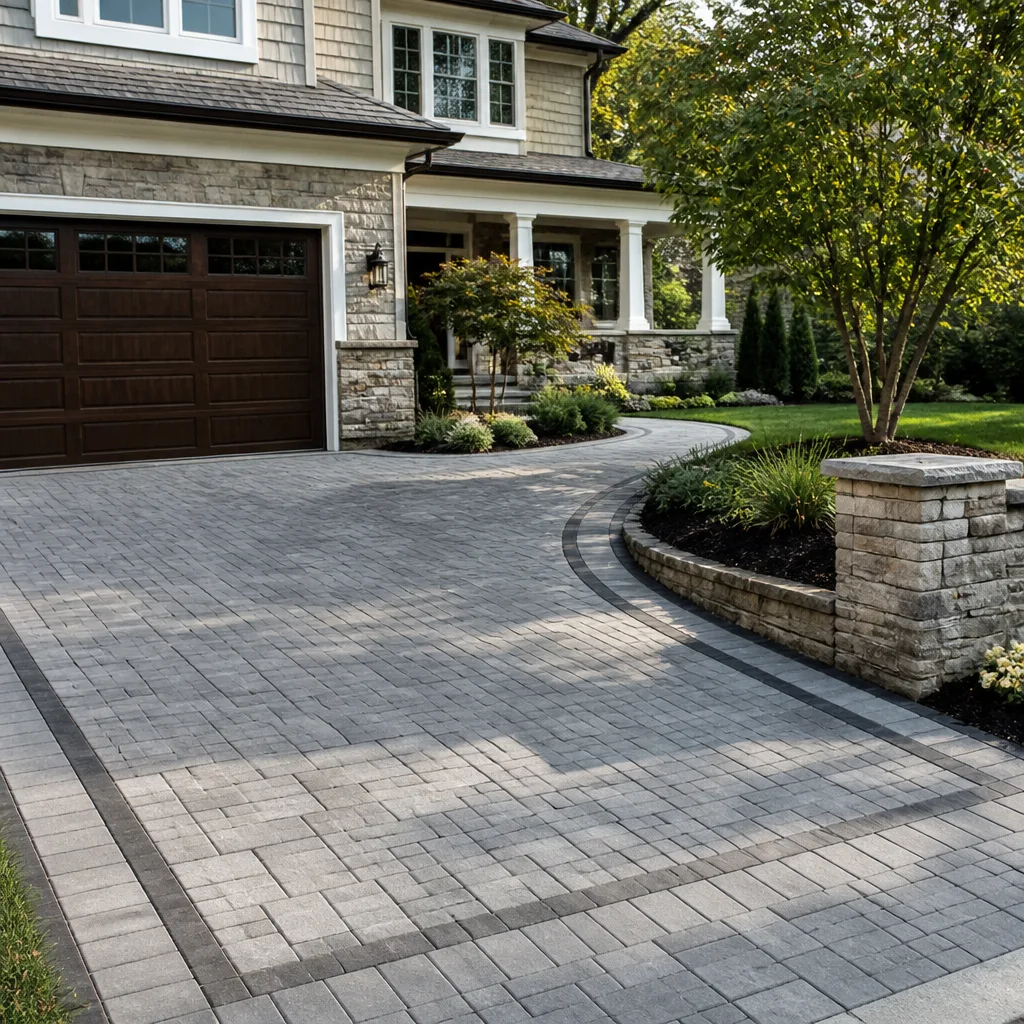
Hardscape joint sand and polymeric sand breakdown is another October item. Pavers, whether from Unilock, Techo-Bloc, or basic concrete, shift slightly with Orlando’s sandy soils and daily summer rains. The polymeric sand between pavers washes out gradually over the season, and by October you’ll see weeds pushing through joints and pavers rocking underfoot. Re-sand the joints and compact the area. Doing this every October keeps your paver patio flat and stable, and it prevents the $3,000 to $6,000 paver reset that becomes necessary when erosion goes unchecked for two or three years.
Check all exterior weatherstripping and door sweeps now. UV degrades rubber and vinyl seals quickly in Florida. A door sweep that was flexible in March may be cracked and stiff by October. Replace these before the winter dry season, when you’ll actually be opening windows and doors more. A complete weatherstripping refresh on a typical Orlando home runs between $150 and $400 in materials, and it pays for itself within a single cooling season through reduced air leakage.
Materials That Fail Fastest in Central Florida (And Their Replacement Intervals)
Every material has a service life, and those service lives are shorter in Orlando than they are in almost any other U.S. metro. The combination of UV index, humidity, rainfall, and salt air from the coast (depending on how far east you are) accelerates degradation across the board. These are the materials we replace most often on Orlando homes, and the actual replacement intervals you should plan for.
| Material | Typical Replacement Interval in Orlando | What Accelerates Failure Here |
|---|---|---|
| Exterior silicone caulk | 3-5 years | UV exposure, thermal expansion on south/west walls |
| Asphalt shingle roof | 18-22 years (vs. 25-30 years in northern states) | UV intensity, wind-driven rain, hail from summer thunderstorms |
| Cement-based tile grout | 8-12 years with sealing; 4-6 years unsealed | Humidity absorption, cleaning product exposure |
| Epoxy tile grout | 20+ years when installed correctly | Rarely fails; replacement usually from renovation, not degradation |
| Exterior paint on south/west walls | 3-4 years | UV index 9-11, direct sun exposure |
| Exterior paint on north/east walls | 6-8 years | Less sun, but still high humidity |
| Window weatherstripping | 2-3 years | UV hardening, temperature cycling |
| Garage door bottom seal | 2-4 years | UV exposure, pest damage |
| AC drain line components | Annual cleaning required; parts last 5-8 years | Algae growth in high-humidity drain lines |
| Polymeric paver joint sand | Annual replenishment needed in many Orlando yards | Heavy summer rain, sandy soil settling |
Brand-specific materials matter here. Window systems from ES Windows and ECO Window Systems use frame materials and gasket compounds designed for coastal UV exposure, so their seal failure rates run significantly lower than budget vinyl windows installed in Central Florida track homes. The same principle applies to paint: a quality exterior acrylic from a manufacturer that formulates for high-UV markets will outperform a generic exterior latex by two to three years. When we write specifications for Home Remodeling in Orlando projects, we specify for Orlando’s climate first and cost second. That approach costs a little more up front and costs dramatically less over ten years.
The Three Maintenance Failures That Void Orlando Insurance Claims
Florida homeowner’s insurance is among the most expensive in the country, and carriers are aggressive about denying claims that trace back to deferred maintenance. Here are the three most common maintenance failures we see on Orlando homes, the ones that lead directly to claim denial letters.
- Long-term water intrusion at a known leak point. If a roof leak, a window leak, or a failing shower pan has been dripping for months, the insurance adjuster will call it “continuous or repeated seepage,” and that exclusion appears in nearly every Florida homeowner’s policy. The key phrase in the denial letter is almost always the same: “resulting from a maintenance condition that was not addressed in a reasonable time.” If you noticed a water stain on the ceiling in March and didn’t repair the roof until July, you’re likely paying for the resulting ceiling and drywall repair out of pocket. That repair commonly runs $3,000 to $8,000 in Orlando once water has gotten into insulation and drywall.
- AC condensate line backup and overflow. When a clogged AC drain line spills water over the air handler pan and into the ceiling below, the insurance adjuster will identify the cause as algae and sludge buildup in the drain line, then apply a maintenance exclusion. The repair itself is inexpensive, but the water damage to drywall, paint, and flooring below the air handler often runs $2,500 to $6,000. This is the most preventable claim denial in Florida, because the prevention costs about $15 in vinegar and an hour per year.
- Roof failure attributed to age and granule loss. Let’s be direct: if your asphalt shingle roof is 18 years old in Orlando and a storm rips shingles off, the insurance carrier will often depreciate the claim to near zero by arguing the roof was at the end of its service life even before the storm. The argument turns on granule loss, shingle curling, and prior weather exposure. Keeping a documented maintenance history, including a professional roof inspection every two years, gives you leverage. Without that documentation, you may find yourself covering a $9,000 to $16,000 re-roof on a 2,000-square-foot Orlando home entirely out of pocket.
None of these exclusions require bad intent on the homeowner’s part. They require deferred maintenance. Staying on top of the checks in this guide, and keeping receipts and photos, is the difference between a paid claim and a denied one.
Your One-Year Post-Project Contractor Walkthrough: What to Demand in Writing
Most Orlando homeowners assume a one-year walkthrough is automatic. It is not. Many contractors schedule a final walkthrough at project completion and then disappear. A proper one-year post-project inspection is a separate visit, and the terms of it should be in your contract before work begins. This is where you discover small failures before they become expensive problems, and where you separate the contractors in Orlando who stand behind their work from the ones who don’t.
Here’s what the one-year walkthrough should cover, and what you should receive in writing afterward:
- Tile and grout inspection in all wet areas. The contractor should inspect every shower, tub surround, and bathroom floor for grout cracking, tile lippage, and any sign of movement. Any cracked grout line should be repaired at no cost to you. This is not a courtesy. It’s the contractor identifying and correcting installation issues before water gets behind the tile.
- Caulk and sealant inspection at every joint. Every expansion joint, every change-of-plane, every fixture-to-surface joint should be re-inspected. Silicone caulk that has pulled away within the first year is either a movement problem or an application problem, and the contractor should address it.
- Cabinet door and drawer adjustment. Orlando’s humidity cycle will have shifted every cabinet door and drawer front slightly. The contractor should adjust all hinges and slides and ensure every door closes properly.
- Plumbing fixture and drain function check. The contractor should run every fixture, check under-sink connections, and inspect the shower valve and drain for leaks that develop after the first year of thermal cycling.
- Paint and drywall nail pop inspection. Nail pops and drywall cracking often appear in the first year as lumber continues to dry. Most are cosmetic and easily fixed. The walkthrough is where they get fixed.
- Written report. After the inspection, the contractor should give you a written summary of what was inspected, what was found, what was repaired, and what remains within the one-year coverage window. Verbal assurances mean nothing if a dispute arises later.
Mason Remodeling Co Orlando performs this one-year walkthrough as a standard part of every Mason Remodeling Co Orlando home project. Our 365-Day Done Right Promise states it plainly: if the work is not right within a year of completion, we make it right at no cost to the homeowner. That promise is written into the contract, not offered as a verbal guarantee. If your contractor will not put the one-year walkthrough in writing, hire a different contractor.
Common Mistakes to Avoid
- Following a northern-season maintenance calendar. Orlando has two seasons: hot and wet, and warm and slightly less wet. A checklist that tells you to “winterize in October” is useless here. Align your maintenance with hurricane season and the daily summer thunderstorm pattern instead.
- Using interior caulk on exterior surfaces. Interior acrylic caulk will fail within one Orlando summer on an exterior fascia joint. Use exterior-rated silicone or polyurethane caulk. The $4 per tube you save turns into a $400 water damage repair.
- Sealing paver joints only when weeds start growing. By the time weeds appear, the joint sand has already washed out significantly and the pavers have already begun shifting. Re-sand and seal on a schedule, in October, every year, not reactively.
- Skipping the AC condensate drain line because “the AC is working fine.” The drain line clogs silently, then overflows catastrophically. This is the single most common preventable water damage claim we see on Orlando homes.
- Using cement-based grout in a shower because it’s cheaper. Orlando’s humidity cycle will crack cement-based shower grout within a few years. The $40 per bag you save becomes a $2,000 to $5,000 shower pan repair when water gets through.
- Accepting a verbal one-year warranty instead of a written one. Verbal warranties are unenforceable and routinely forgotten. Get the coverage terms in writing: what’s covered, what’s excluded, and for exactly how long.
- Deferring roof maintenance until a leak appears. By the time water is coming through the ceiling, the roof decking, insulation, and drywall are all involved. Inspect before storm season, every year, without exception.
When to Call a Professional
Most of the checks in this guide are DIY-appropriate. But there are clear signals that it’s time to bring in a licensed general contractor in Orlando. Call a professional if you find: roof decking gaps wider than a quarter inch in the attic, more than two rusted or loose hurricane straps, water stains on ceilings that appear after rain, persistent indoor humidity above 60 percent despite a functioning AC, or grout failure in a shower pan that’s already been patched once. These conditions suggest underlying structural, drainage, or ventilation problems that a surface-level fix won’t resolve. General Contractor in Orlando services should include a written assessment and written pricing before any work starts. Mason Remodeling Co Orlando offers free estimates throughout the Orlando area. Call (850) 920-7745 to schedule yours, and you’ll get a written price before any tools arrive.
Frequently Asked Questions
Expect to budget $800 to $1,400 per year for preventive maintenance on a 2,000-square-foot Orlando home, assuming you do the small tasks like caulking and drain line flushing yourself and hire pros for roof inspections and exterior painting. The largest recurring expense is exterior paint touch-ups on south and west walls every 3 to 4 years, which typically runs $400 to $1,200 per touch-up depending on coverage area. Call (850) 920-7745 if you want a line-item estimate for specific maintenance work on your home.
Yes, because the strapping is exposed to attic heat and humidity year-round, and rust develops faster than most homeowners expect. The annual check takes under an hour and catches loose or rusted straps before a storm does. If you’re not comfortable going into the attic yourself, a general contractor can perform the inspection as part of a pre-season maintenance visit.
Coverage depends on the cause and the timeline. A sudden storm that tears shingles off and lets water in is generally covered. A slow leak that’s been dripping for months is typically denied under the “continuous or repeated seepage” exclusion. That’s why the March roof check and prompt repair are so important. Document everything with photos and keep receipts for any repair work you do.
With proper materials and maintenance, a well-built bathroom remodel in Orlando should last 15 to 20 years before major components need replacement. The weak points are always the same: shower pan waterproofing, grout in the wet areas, and caulk joints. Choosing epoxy grout and maintaining the caulk on a 3 to 5 year cycle extends the life dramatically. Our Bathroom Remodeling in Orlando work specifications account for the humidity cycle from day one.
The AC condensate drain line flush. It’s invisible, it’s out of sight, and it never announces itself until the moment it overflows. We estimate that more than half of the water damage claims we see in the Orlando area begin with a clogged drain line. The fix costs less than $20 per year in vinegar and takes ten minutes per quarter.
You can and should do a ground-level inspection after any named storm or severe thunderstorm, looking for missing shingles, damaged flashing, and debris on the roof. But do not climb onto the roof. Wet shingles are slippery, and Orlando’s post-storm roofs are frequently covered with loose granules and debris. If the ground-level inspection shows damage, call a professional for the detailed assessment. Call (850) 920-7745 and we’ll get you scheduled.
The Bottom Line
Orlando maintenance is a year-round discipline, not a spring and fall event. The climate here punishes deferred maintenance faster than almost anywhere else in the country: UV damage on the exterior, humidity stress on every interior joint and seal, and a storm season that turns small weaknesses into major failures. The homeowner who follows the month-by-month plan in this guide, documents everything, and keeps the one-year walkthrough in writing will spend less money over time and win more insurance disputes than the homeowner who wings it. If you want a professional partner who writes everything down, shows up with verified crews, and stands behind the work for a full year, we’re here. This checklist is your starting point, and we’re a phone call away.
Written by Isaac Pruett, Owner at Mason Remodeling Co Orlando, serving Orlando since 2004.
See the difference
 Before
 After
After Before
 After
After Before
 After
After