Last updated October 15, 2026






Free written scope consultation - allowances, timeline, and change-order rules on paper before a single trade is scheduled
How to Hire a Construction Contractor in Orlando: A Step-by-Step Guide
Florida’s Department of Business and Professional Regulation logs more contractor complaints per capita than 43 other states. Dig into those complaints and a pattern emerges: the homeowner confirmed a license but never confirmed the crew. They knew the company name on the contract. They didn’t know the name of the person walking through their front door. This guide fixes that. You’ll learn how to verify a contractor’s license, insurance, and the actual humans who show up, how to write a scope of work that holds up in a dispute, and what a written price guarantee has to say before it means anything in Orlando.
Styles & brands we work with





Quick Answer
To hire a construction contractor in Orlando, verify three things before you sign anything: the company’s state license through the Florida DBPR, their insurance certificate directly with the insurer, and the identity of every crew member who will enter your home. Then get a written scope of work and a written price guarantee with specific dollar figures, exclusions, and a warranty end date. Skip any of these and you’re gambling, not hiring.
Table of Contents
- The Three-Layer Verification: License, Insurance, and Crew
- How to Write a Scope of Work That Protects You
- What a Written Price Guarantee Actually Has to Say
- Red Flags in the First Phone Call
- Checking Orange County and DBPR Complaint Histories in Under Five Minutes
- Orlando-Specific Factors: Climate, Code, and Market Realities
- The Full Hiring Process, Step by Step
- Common Mistakes to Avoid
- When to Call a Professional
- Frequently Asked Questions
- The Bottom Line
Key Takeaways
- A license number proves the company exists legally. It does not prove the person at your door works for that company.
- Insurance certificates can be forged or expired. Call the insurer directly and ask for a certificate holder copy.
- The two points where Orlando remodeler disputes break down: verbal scope changes and crew substitution. Both are fixable with paper before work starts.
- Orange County and DBPR complaint checks take less than five minutes and should happen before any estimate appointment.
- A written price is only as good as the exclusions section. No exclusions listed means the price is a guess.
The Three-Layer Verification: License, Insurance, and Crew
Most homeowners stop at layer one. They check a license number, see it’s active, and assume that settles it. A license tells you the business entity is registered with the Florida Department of Business and Professional Regulation. It does not tell you who will walk through your door. Contractors in Orlando routinely use subcontractors. Some are excellent. Some are not. You need to know which one you’re getting before the work starts, not after the tile is laid wrong.
Here’s what each layer actually verifies, and how to check it in Orlando:
- License (Layer 1): Go to the Florida DBPR website and search the contractor’s name or license number. You’re looking for an “Active” status, a “Certified” or “Registered” designation for the specific work (general contractor, residential contractor, building contractor), and no open disciplinary cases. In Orange County, you’ll also want to confirm the contractor is registered locally, not just state-wide. A state-certified contractor can work in any county. A state-registered contractor is limited to specific jurisdictions. If your contractor is registered but not for Orange County, that’s a problem.
- Insurance (Layer 2): Ask for a certificate of insurance, then verify it directly with the insurer. Certificates can be altered in a PDF editor in five minutes. Call the insurance company listed, give them the policy number, and ask two questions: Is this policy active, and does it list the contractor as the named insured? While you’re at it, ask for a certificate holder copy to be sent directly to you. That takes two minutes and gives you proof that you’re covered if property damage occurs during the job.
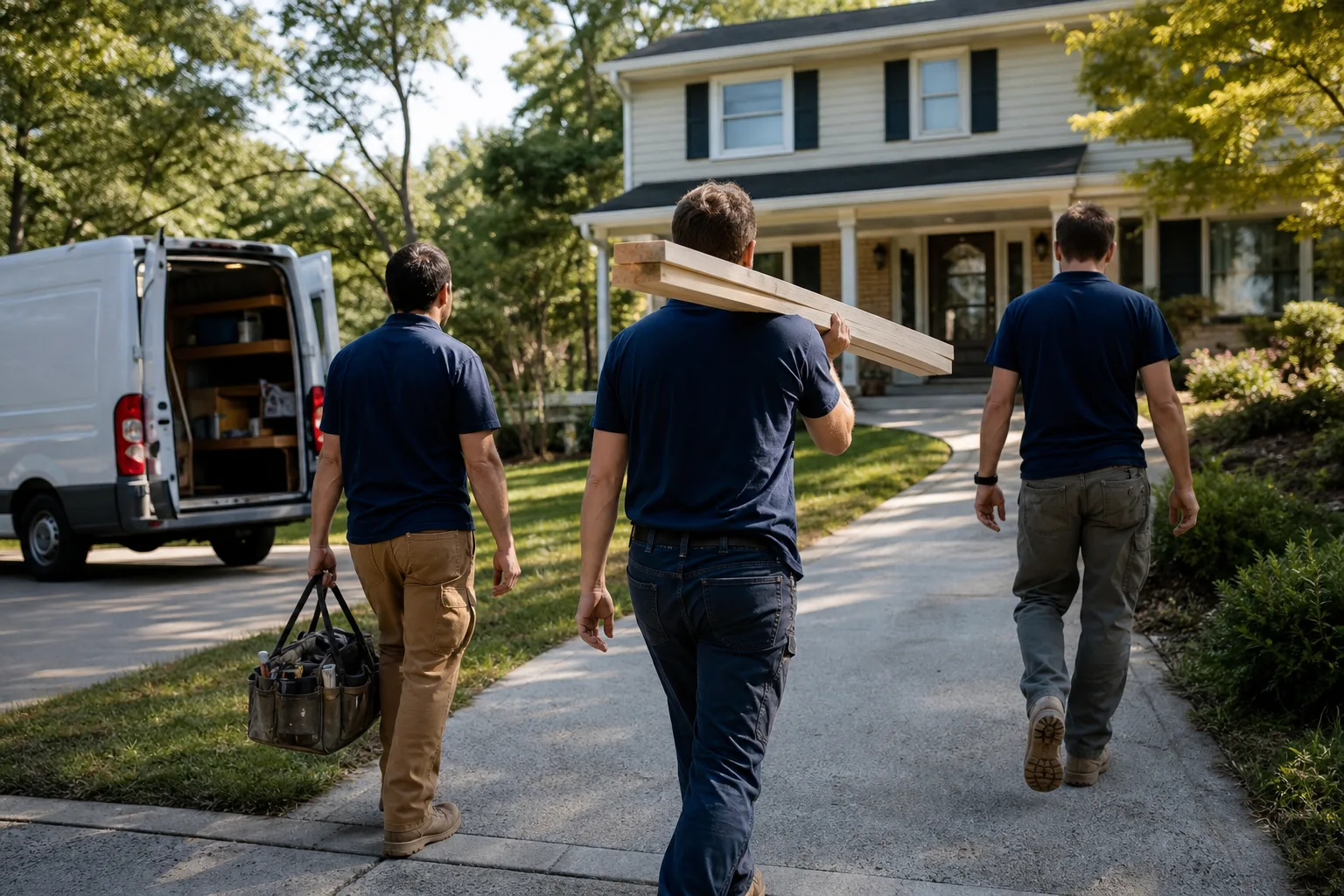
- Crew Verification (Layer 3): This is the layer almost everyone skips, and it’s the one that matters most if you’re home alone, you have young children, or you’re older and treating every knock on the door as a security decision. Ask the contractor for the names of every technician who will work on your project. Ask whether those people are background-checked and identity-verified. Ask how you’ll recognize them when they arrive: uniform, photo ID badge, introduction by name. At Mason Remodeling Co Orlando, we follow what we call the Threshold Standard: every crew member is background-checked and identity-verified before stepping onto a job site, and you get their name and photo before the visit. At the door, they show a photo ID badge. You should expect the same from any contractor you hire in Orlando. If a company won’t tell you who is coming, that’s information too.
How to Write a Scope of Work That Protects You
A scope of work is the single most important document in your remodel, and most Orlando homeowners sign one that’s three sentences long: “Remodel master bathroom. Install new tile, vanity, and shower. Per plan.” That’s not a scope. That’s a starting point for a disagreement. A real scope lists every material, every fixture, every finish, with brand names and model numbers where they exist. It says what gets demolished and what stays. It says who handles waste removal and where the dumpster goes. It says what happens if the old subfloor is rotten when they tear up the tile.
Here’s how to build a scope that actually protects you in Orange County:
- List materials by brand and model, not by category. “Kohler shower head” is not specific enough. “Kohler Purist 2.5 GPM shower head in brushed nickel” is. If the contractor substitutes a different model, the scope tells you whether it’s an equal substitution or a downgrade. Without the model number, you won’t know until the fixture is installed and the receipt is in your hand.
- State what is not included. Does the price include haul-away of old tile and drywall? Does it include paint touch-up after the new vanity goes in? Does it include the building permit fee or is that a separate line item? If it’s not in scope, assume it’s not included. Contractors are not mind-readers, and disputes almost always involve something that was never said out loud.
- Define what happens with unexpected conditions. In Orlando homes built in the 1950s and 1960s (College Park, Audubon Park, Winter Park), we regularly find cast-iron drain pipes that have corroded, or floor joists that have water damage under old bathrooms. A good scope says: if hidden conditions are discovered, the contractor will stop work, document the issue with photos, and get your written approval before proceeding with a change order. This sentence alone prevents the “we found a problem and fixed it, now you owe us more” conversation that generates so many DBPR complaints.
- Include a timeline with milestones. Not just “project takes six weeks.” Say: demolition complete by week one, rough plumbing and electrical inspection by week three, tile set by week five, final walkthrough by week six. Milestones let you track progress and hold the contractor accountable without hovering over the work site.
- Put the permit responsibility in writing. In the City of Orlando and unincorporated Orange County, most bathroom remodels and any structural work require permits. State who pulls them, who pays for them, and who schedules inspections. If the contractor says you don’t need a permit for a bathroom remodel, get a second opinion from the Orange County Building Division. Unpermitted work can complicate a future home sale and your homeowner’s insurance claim.
What a Written Price Guarantee Actually Has to Say
Every contractor says they stand behind their work. Most can’t point to a document that says what that means. A verbal promise is worth the breath it takes to say it. A written price guarantee has to contain specific, enforceable language, or it’s a slogan, not a guarantee. In our experience at Mason Remodeling Co Orlando, homeowners rarely read the guarantee until there’s a problem, and by then the language matters enormously.
Here’s what to look for in a written price guarantee, and what to reject:
- The price itself. The guarantee must say the price in the written estimate is the price you will pay, barring written change orders you’ve approved. “Written Price Before Any Work Starts” means the number is in ink, not pencil. If a contractor won’t put the price in writing before the first tool is unpacked, you are financing their uncertainty.
- The duration. “365 days from the completion date” is a real number you can point to. “Backed by our guarantee” is not a guarantee. It’s a sentence fragment. Ask for the number of days, weeks, or months of coverage, and when the clock starts.
- What is covered. Does the guarantee cover workmanship only, or also materials? A cabinet door that warps six months after a kitchen remodel, is it covered? A grout line that cracks? A shower valve that drips? The coverage section should list categories: carpentry, tile work, plumbing connections, electrical work, paint finishes. If a category is missing, it’s not covered.
- What is excluded. Every guarantee has exclusions. Harsh chemical damage to surfaces, normal wear on high-traffic areas, homeowner modifications, and acts of nature like flooding or hurricane damage are standard exclusions in Orlando. The exclusion list should be specific. A guarantee with no exclusions listed is a guarantee that was never written by a lawyer, which means it may not survive contact with a dispute.
- The remedy. If something fails, what happens? Do they send a crew back within a week? A month? Is there a charge for the return visit? The guarantee should state the remedy: a repair at no cost, a replacement at no cost, or a refund for the defective portion. At Mason Remodeling Co Orlando, we include a free second visit if a repair or installation fails within the warranty period, no charge and no dispute process. You should expect similar clarity from any contractor you’re paying tens of thousands of dollars in the Orlando market.
Red Flags in the First Phone Call
Experienced homeowners catch problems in the first five minutes of the first call. First-timers catch them at the end of the project, when the bill arrives. Here are the red flags we’ve seen over twenty years serving Orlando that you should listen for:
- “I can start tomorrow.” Good contractors in Orlando are booked weeks out, not sitting by the phone. A contractor with immediate availability is either new, or nobody’s hiring them. Neither is good.
- “We’ll figure out the price as we go.” No. The price is the first question, not the last. A contractor who can’t price the job hasn’t done the job before, or is planning to price it based on how much they think you can pay.
- “Cash discount.” Cash payments mean no paper trail. No paper trail means no recourse if the work fails. Any discount that only applies when you can’t verify the transaction is not a discount; it’s a red flag with a bow on it.
- “I don’t have a license, but I do better work than those licensed guys.” In the state of Florida, a contractor performing work without a license is committing a misdemeanor for the first offense and a felony for repeat offenses. Walk away.
- “Permits slow things down. You don’t need one for this.” In the City of Orlando, permits are required for most renovations beyond cosmetic work. A contractor who tells you to skip permits is asking you to carry the legal risk for work they’re being paid to do. You can call the Orange County Building Division at (850) 920-7745 to ask if your project needs a permit. The call takes two minutes and saves you from an unpermitted mess.
Checking Orange County and DBPR Complaint Histories in Under Five Minutes
You can do this before the contractor even arrives for an estimate. Set aside five minutes. It’s the fastest due diligence you’ll ever do on someone who’s about to spend weeks inside your home, and we have more guides & resources to help.
- Open the Florida DBPR website (myfloridalicense.com). Search the contractor’s name or license number. You’re looking for three tabs: License Status, Discipline, and Complaints. License Status should say “Current, Active.” Discipline should be empty or fully resolved, not “Pending.” Complaints tells you whether past disputes were resolved, dismissed, or led to action. In the Orlando market, we see a surprising number of active complaints against companies that have five-star review profiles. Reviews can be curated. DBPR records can’t.
- Search the Orange County Comptroller’s website for building permits and contractor registrations. Orange County tracks permit history by address and contractor name. Pull the contractor’s recent permits. A contractor who has pulled permits consistently for years in Orlando neighborhoods like Dr. Phillips, Conway, and Lake Nona is operating legally and with a track record. A contractor with no permit history is either new or avoiding the system.
- Run a quick review scan, but read between the lines. Look at review platforms, but search for keywords: “no-show,” “didn’t finish,” “scope changed,” “price went up.” Every contractor has a bad review or two. The pattern matters. And remember: reviews don’t verify licenses, insurance, or crew. They tell you about satisfaction. DBPR and Orange County records tell you about legality and reliability.
Orlando-Specific Factors: Climate, Code, and Market Realities
Hiring a contractor in Orlando is not the same as hiring one in Ohio or Oregon. The climate, the building code, and the local market all shape what you need to ask before you sign. Here’s what Orlando homeowners specifically face:
Heat, Humidity, and Mold
Orlando’s humidity sits above 70% most of the year. Bathroom remodels that don’t address ventilation will grow mold inside the new walls within two years. Ask your contractor about exhaust fans rated for the room’s square footage, moisture-resistant drywall (green board or cement board in wet areas), and proper waterproofing behind tile. In College Park and Delaney Park, where we see older homes with original plaster and no bathroom ventilation, this is the difference between a remodel that lasts five years and one that lasts twenty. A Schluter system or similar waterproofing membrane behind tile, the orange membrane you’ll see in photos of properly done showers, is not an upsell in this climate. It’s baseline.
Florida Building Code: Wind and Water
Orlando falls under the Florida Building Code, which has some of the strictest wind-load requirements in the country. Any structural work, and some non-structural work, has to meet wind mitigation standards that don’t exist in most states. Exterior work, roof work, and any wall opening requires a contractor who understands hurricane-rated products and code compliance. Even interior remodels sometimes trigger code upgrades: if you touch more than a certain percentage of a wall’s surface, that wall may need to be brought up to current electrical code. A good Orlando contractor knows this and prices it in. A bad one discovers it mid-project and sends you a change order.
Older Housing Stock
Orlando’s inner-ring neighborhoods like Thornton Park, Colonialtown North, and Eola Heights are full of 1940s and 1950s block homes with cast-iron plumbing, ungrounded electrical, and asbestos vinyl flooring. These are real conditions that can’t be priced from a phone call. A contractor who gives you a hard bid over the phone for a bathroom remodel in Colonialtown is guessing. We do free in-home estimates for precisely this reason, and our Bathroom Remodeling in Orlando clients know that hidden conditions are handled with written change orders, not surprise invoices.
Material Sourcing and Specifications
Orlando sits between several major distribution hubs, which means most materials are available, but lead times vary. Custom cabinets from KraftMaid or Wellborn can run four to eight weeks. Quartz from Cambria, Silestone, or Caesarstone can take two to six weeks depending on color and slab availability. Hardscape products from Belgard or Unilock go through regional suppliers that sometimes run short after storm seasons. A contractor who promises a three-week kitchen remodel in Orlando is either using stock materials from a big-box store or lying to you. Ask about material lead times in writing.
The Full Hiring Process, Step by Step
Here’s the hiring sequence we recommend to every Orlando homeowner. It works for a General Contractor in Orlando, a bathroom remodeler, a roofer, or anybody else who will be working in your home with a permit on the line.
- Shortlist three contractors. Ask for referrals from neighbors in Orlando. Drive by active job sites in your area and note the company names on the permits posted in windows. Then run all three through the DBPR and Orange County checks above. Cut anyone who fails.
- Call each one and ask the three-layer questions. Will you send me the names and photos of the crew before the visit? Is your price in writing before work starts? What does your warranty say, specifically, in days and exclusions? Listen for the red flags. Anyone who hesitates on the crew question gets cut. Your home is your private space. If they won’t tell you who’s coming into it, they don’t belong in it.
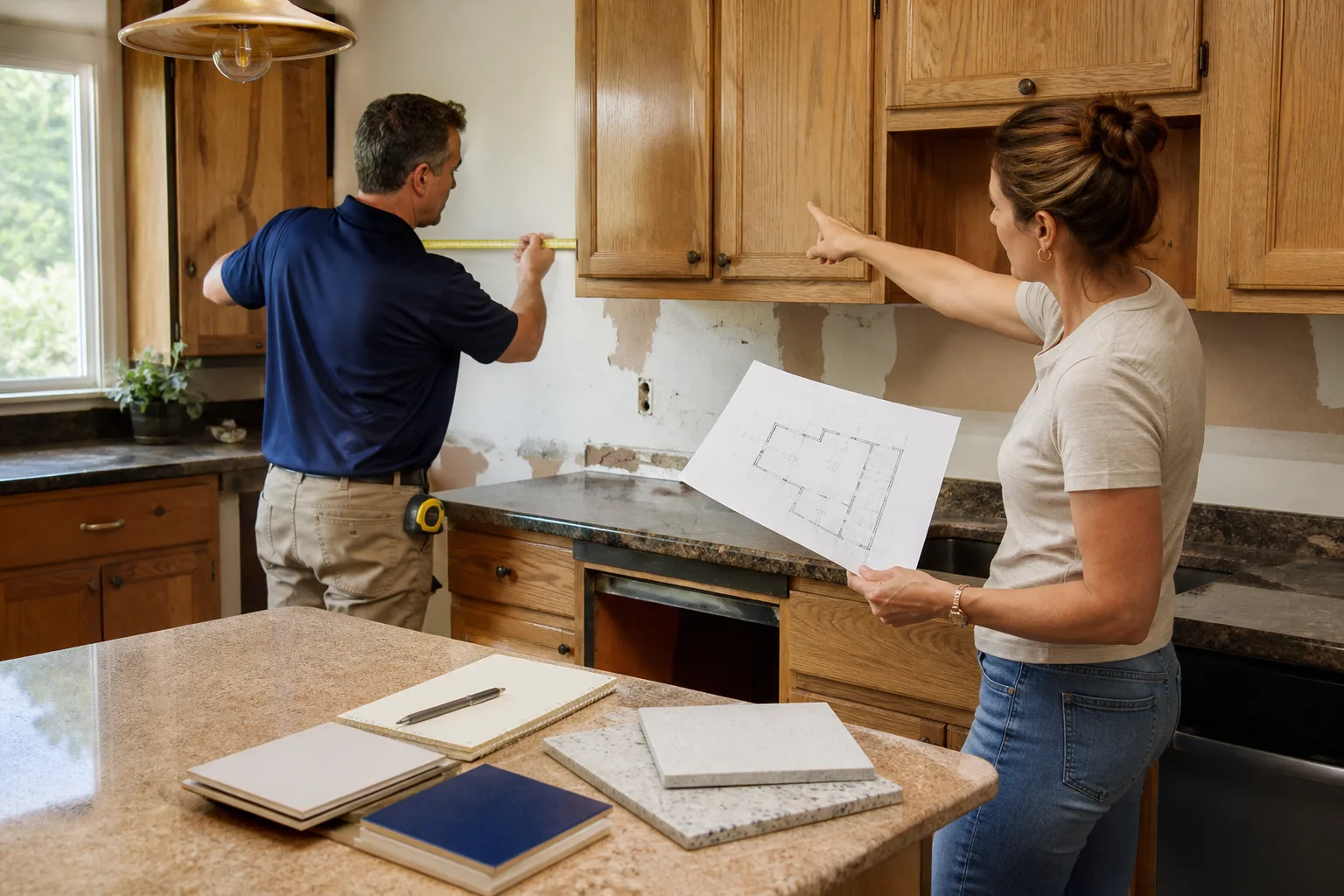
- Schedule in-home estimates with the survivors. Walk the job with each contractor. Show them the space, tell them what you want, and ask them what they see that you don’t. A good contractor will find problems in the first walkthrough: water stains, cracked tile, framing issues. That’s not upselling. That’s competence.
- Get three written scopes and three written prices. Compare them line by line. If one bid is dramatically lower, the scope is where the difference hides. Ask the low bidder to reconcile: what’s missing? What material got swapped? What labor got cut? In Orlando’s current market, labor rates are fairly consistent across reputable companies. A bid 30% below the others is not a bargain. It’s a warning.
- Check references before signing. Ask for addresses of completed projects from the last 12 months. Drive by. Knock on the door if the homeowner is home. Orlando remodelers who do good work are happy to give you references. Ones who don’t will stall.
- Read the contract, the scope, and the guarantee one more time. No signature until every material is listed, every exclusion is in writing, and every crew member’s verification is confirmed. Then sign and get a copy of everything on the spot.
If this feels like a lot of work, it is. But the alternative is trusting a stranger with your house, your money, and your family’s living space for weeks. The process you skip is the one that gets you into a DBPR complaint file. Visit our Home Remodeling in Orlando page to see how we handle the process from the contractor’s side.
Common Mistakes to Avoid
- Hiring based on price alone. The cheapest bid in Orlando is often a scope with holes in it. You find the holes at week four, when the contractor asks for more money to finish. Compare scopes, not numbers.
- Skipping the crew verification. You verified the license. You verified the insurance. Then a different crew shows up than the one you discussed. In Orlando’s busy remodeling market, subcontractor crews rotate constantly. Get the names in writing before work starts.
- Accepting a verbal price. “Around twelve grand” is not a price. It’s a starting point for negotiation. Written Price Before Any Work Starts is the standard. If a contractor won’t put it in writing, he’s keeping his options open at your expense.
- Not reading the exclusions section. The guarantee says “365 days.” The exclusions say “tile work not covered.” Congratulations, your two-year-old shower tile is cracking and you have no recourse. Read the exclusions before you sign, not after the crack appears.
- Paying too much upfront. Florida law limits down payments on residential construction contracts to 10% of the contract price or $1,000, whichever is less, unless the contractor can show that materials have been ordered. Any contractor in Orlando asking for 30% or 50% down before work starts is either floating your money or not creditworthy. Neither is your problem to solve.
- Skipping the permit. Unpermitted work in the City of Orlando can trigger a stop-work order, a fine, and a requirement to tear out finished work for inspection. The contractor who told you to skip the permit won’t be around to help with that.
- Not asking about material lead times. You planned a six-week remodel. The cabinets take eight weeks. Now your kitchen is a construction zone for twice as long as expected, and the contractor says it’s not his fault. It kind of is. Material lead times are knowable. Get them in the scope.
When to Call a Professional
You should call a licensed contractor for any work in Orlando that involves structural changes, plumbing, electrical, waterproofing, or anything that requires a permit. That includes full bathroom remodels where you’re moving a shower or vanity, kitchen remodels that involve moving load-bearing walls, any exterior door or window replacement, and all roofing work. In Orlando’s humid climate, even tile work in wet areas calls for a professional who understands waterproofing. A wrong waterproofing install creates mold you won’t see until it’s behind the walls and into the studs.
If you’re not sure whether your project needs a contractor, call a licensed company and ask. Mason Remodeling Co Orlando offers free estimates throughout the Orlando area, call (850) 920-7745 and we’ll help you figure out what your project actually requires.
Frequently Asked Questions
General contracting fees in Orlando typically run 15% to 25% of the total project cost, depending on project complexity and the contractor’s overhead; see our Construction Cost Breakdown: The Orlando Homeowner’s Reference for 2026 for deeper numbers. For a $50,000 bathroom remodel, that’s $7,500 to $12,500 in contractor fees on top of labor and materials. Some contractors in Orlando bid projects as a single fixed price with no separate GC line item, which makes comparison harder but isn’t necessarily worse. Call (850) 920-7745 for a written estimate on your specific project. Estimates are free.
A general contractor in Orlando needs a Florida DBPR Certified General Contractor license (CGC) or a Registered General Contractor license recognized by Orange County. Specialty contractors, like plumbers and electricians, need their own trade licenses from the DBPR or local jurisdiction. The state’s DBPR website lets you verify any license number in under two minutes. Do that before the estimate, not after.
Go to the Florida DBPR website and search the contractor’s name or license number, then look at the Discipline and Complaints tabs for any open or resolved actions. For local records, call the Orange County Building Division at (850) 920-7745 and ask about the contractor’s permit history and any stop-work orders on record. The whole process takes under five minutes.
A Florida construction contract should include a written scope of work with material brands and model numbers, a firm price with a clear payment schedule that does not exceed the state’s 10% down payment limit, a start and completion date, a permit responsibility clause, a change order process, and a warranty with specific duration and exclusions. If any of those elements is missing, the contract is incomplete. Ask for the missing piece in writing before you sign.
The price should not change unless you approve a written change order for a specific reason, such as discovering hidden damage or choosing to upgrade materials. A contractor who tells you the price is subject to change based on “unforeseen conditions” without defining what those conditions are is giving you a price that can become anything. Our policy at Mason Remodeling Co Orlando is a Written Price Before Any Work Starts, and change orders only happen with your written sign-off. Call (850) 920-7745 to get a written estimate for your Orlando remodel.
Yes, most bathroom remodels in the City of Orlando require a building permit if you’re moving plumbing, altering electrical, changing the room’s footprint, or doing structural work. Cosmetic replacements, like swapping a vanity without moving plumbing, may not require a permit. The Orange County Building Division can confirm your specific situation. A contractor who tells you permits aren’t necessary should be replaced.
A full bathroom remodel in Orlando typically takes four to eight weeks depending on material lead times, while a kitchen remodel runs eight to sixteen weeks. Whole-home remodels can span three to nine months. Orlando’s humid summers don’t slow interior work significantly, but exterior work and any concrete or stucco phases can be delayed by afternoon thunderstorms during hurricane season. Get a timeline with milestones in your scope of work, and expect material lead times to be the biggest wildcard.
The Bottom Line
Hiring a construction contractor in Orlando comes down to two moments most people skip: proving who is actually walking through your door, and putting every price, material, and warranty term in writing before work starts. The license check, the insurance verification, the DBPR and Orange County complaint review, the scope of work with brand names and exclusions, the written price guarantee with a real duration, these are not optional steps. They’re the difference between a remodel that finishes on budget and a renovation that ends in a dispute file. Do the five minutes of verification. Get the names. Get the paper. Then sign. And if you ever want an Orlando contractor who does all of this as standard, Mason Remodeling Co Orlando home is a good place to start. Call (850) 920-7745 for a free estimate on your project.
Written by Isaac Pruett, Owner at Mason Remodeling Co Orlando, serving Orlando since 2004.
See the difference
 Before
 After
After Before
 After
After Before
 After
After