Last updated October 15, 2026






Free written scope consultation - allowances, timeline, and change-order rules on paper before a single trade is scheduled
DIY vs Professional Construction: The Orlando Homeowner’s Decision Guide
In 2025, a Windermere homeowner tiled his guest bathroom beautifully. Level lines, tight grout joints, clean cuts around the toilet flange. Eighteen months later, at refinance, the appraisal flagged the bathroom because the plumbing rough-in underneath had no permit record in Orange County. The fix required opening the wall, exposing the work for inspection, and paying $8,200 in remediation before the loan could move forward. The tile was never the problem. The missing paper trail was.
This guide explains what Orlando homeowners actually need to weigh before picking up a hammer or picking up the phone. We’ll cover Florida-specific permit law, HOA enforcement, insurance gaps, real cost math, and the honest skill assessment most articles skip. By the end, you’ll know which projects make sense as DIY in Orlando, and which ones carry hidden costs that erase any savings.
Quick Answer
DIY construction in Orlando makes financial sense for cosmetic finish work like painting, trim, and basic fixture swaps, but Florida law, HOA rules, and insurance policies make professional help effectively mandatory for any project involving plumbing rough-in, electrical panel work, structural changes, or waterproofing. The real decision isn’t “can I do this” – it’s “can I prove it was done right when I sell, refinance, or file a claim.”
Styles & brands we work with
Table of Contents
- What Florida Law Says You Cannot DIY in Orlando
- How Orlando HOAs Restrict Construction Beyond City Code
- The Insurance Coverage Gaps That Only Appear at Claim Time
- Why Orlando’s Climate Changes the DIY Math
- The Real Cost Comparison: DIY vs Professional in 2026
- Honest Skill and Time Assessment for Orlando Homeowners
- Which Projects Still Make Financial Sense as DIY
- Which Projects the Math No Longer Supports as DIY
- Common Mistakes to Avoid
- When to Call a Professional
- Frequently Asked Questions
What Florida Law Says You Cannot DIY in Orlando
Florida Statute 489.103 draws a hard line between what a homeowner may do to their own residence and what requires a licensed contractor. The state carves out an owner-builder exemption, but it is narrower than most Orlando homeowners realize. You can act as your own contractor on your primary residence, provided you live there and do the work yourself or hire licensed subcontractors directly. That exemption evaporates the moment you sell, lease, or convert the property within one year of completion. Orlando’s real estate market moves fast, and plenty of homeowners have discovered this clause at closing.
Here is what Florida law prohibits owner-performed work on, regardless of skill level:
- Any plumbing work beyond fixture replacement. Swapping a faucet is fine. Moving a drain line, relocating a supply line, or touching the main stack requires a licensed plumber in Orange County. The code enforcement division treats unpermitted plumbing as a life-safety issue, not a paperwork formality.
- Electrical work beyond device-level replacement. Replacing an outlet or switch is permissible. Adding a circuit, moving a panel, or running new wire through walls requires a licensed electrician and an inspection. Florida’s high humidity and frequent storms make improper electrical work a genuine fire and shock hazard in Orlando homes.
- Structural modifications of any kind. Removing a load-bearing wall, enlarging a window opening, or altering roof framing falls under work that requires an engineer’s stamp and a licensed contractor. Orange County will not issue a permit for structural work to an unlicensed owner unless full plans are submitted, which most DIYers cannot produce.
- Gas line installation or modification. Work on gas lines is flatly prohibited for unlicensed persons. This is not a gray area. Orlando code enforcement and utility companies both treat unpermitted gas work as an immediate safety hazard.
- Roof replacement on homes that fall within the Florida Building Code’s wind-borne debris region. All of Orlando falls within this region. A roof is a structural system here, not a covering, and the code treats it that way.
We’ve watched skilled Orlando homeowners do immaculate work that still failed inspection because they didn’t know the specific code requirements for Orange County. The inspector isn’t evaluating your craftsmanship. They’re verifying compliance with an updated Florida Building Code that changes every three years. The 8th Edition took effect December 31, 2023, and it shifted several waterproofing and wind-mitigation requirements that make older DIY guides obsolete.
How Orlando HOAs Restrict Construction Beyond City Code
Orlando’s HOA density is among the highest in Florida. Lake Nona, Baldwin Park, Avalon Park, Celebration, Hunter’s Creek, and most communities inside MetroWest all operate under covenants that add layers of restriction on top of city permitting. A project that Orange County approves with a simple permit may still violate your HOA’s design standards, and the HOA carries its own enforcement powers that can stop work, levy fines, or force reversal of completed work.
Here is the process we tell every Orlando homeowner to follow before buying a single material, drawn from our General Contractor Maintenance Checklist for Orlando Homeowners:
- Pull your HOA’s architectural guidelines first. These are not the same as the CCRs. The architectural guidelines govern what materials, colors, and construction methods are allowed on visible exterior changes. Baldwin Park’s guidelines, for example, regulate window styles and even the sheen level of exterior paint.
- Check your specific subdivision, not just the master association. Many Orlando communities have two layers: a master association and a sub-association. Celebration operates this way, and the sub-association often carries stricter rules than the master.
- Submit an ARC (Architectural Review Committee) request before any work begins. Most Orlando HOAs require 30 to 60 days of review time. Starting work before approval is the most common HOA violation we see, and HOAs in Orange County can and do issue stop-work orders.
- For interior work, verify what the HOA requires you to disclose. Many Orlando HOAs require notification, not approval, for interior remodeling, but some demand to see professional plans when the work involves plumbing or electrical changes. Avalon Park is an example where interior plumbing modifications trigger HOA review because of shared wall considerations in attached homes.
- Check whether your neighborhood sits inside a Community Development District (CDD). Lake Nona and parts of Horizon West have CDDs that levy their own assessments and sometimes maintain their own construction standards. A CDD restriction is legally distinct from an HOA restriction, and violating one does not excuse violating the other.
We’ve had Orlando homeowners come to us after purchasing $3,000 worth of pavers that their HOA rejected because the community’s approved materials list specified a different manufacturer. That mistake is avoidable with a phone call or a read-through of the guidelines before ordering. For a guide to how Orlando’s neighborhoods differ on code and restrictions, start with the Mason Remodeling Co Orlando home page, which covers the areas we serve.
The Insurance Coverage Gaps That Only Appear at Claim Time
Florida homeowners insurance is expensive and specific, and DIY work creates coverage problems that Orlando homeowners typically don’t discover until they file a claim. The issue is rarely at policy issuance. It’s at claim time, when an adjuster reviews what work was done, by whom, and whether it was permitted. Unpermitted work gives the carrier a reason to deny or reduce a claim, and Florida courts have upheld these denials.
Here are the specific scenarios that create gaps:
- Water damage claims tied to unpermitted plumbing work. If an Orlando homeowner relocates a supply line without a permit and that line fails years later, flooding the kitchen, the insurer can argue that the loss resulted from work that was never inspected or approved. In practice, that means the claim gets denied or the payout gets reduced by the cost of the damage the unpermitted work caused.
- Mold claims where waterproofing was DIY. Florida’s climate makes mold a standard feature of water intrusion claims. If mold damage traces back to an improperly waterproofed shower or an incorrectly flashed window, and the homeowner performed the work themselves without permits, the carrier has a clear coverage defense. Orlando’s humidity compounds this because mold grows fast here, and remediation costs run high.
- Structural failure after a DIY wall removal. Removing even a non-load-bearing wall without understanding load transfer can cause sagging floors or cracked drywall. Worse, removing a load-bearing wall without proper support can lead to actual structural failure, especially in Orlando’s wind events. An insurer investigating that claim will review the permit history and will find none.
- Electrical fires traced to DIY panel or wiring work. This is the scenario where coverage denial is most common and most damaging, because fire claims are the largest-dollar claims insurers defend. Orlando homes built in the 1970s through the 1990s often have wiring that predates current code, and DIY modifications compound the risk.
- Roof claims after DIY repairs or partial replacement. Florida insurers scrutinize roof condition more aggressively than insurers anywhere else in the country. A DIY patch or partial re-roof, even if done carefully, often fails to meet the wind-mitigation standards that Orlando insurers require for continued coverage. At claim time, the carrier may argue the roof was not properly maintained or installed, and reduce or deny the claim.
The takeaway is not that every DIY project voids your insurance. It’s that the specific projects where failure causes expensive claims are exactly the projects where permit records and licensed work protect you. For Orlando homeowners, the insurance math is part of the DIY-vs-pro calculation. A Home Remodeling in Orlando assessment from a licensed contractor includes this documentation trail, which is part of what you’re paying for.
Why Orlando’s Climate Changes the DIY Math
Orlando averages over 50 inches of rain per year. The daily summer thunderstorms deliver intense downpours. Humidity sits above 80% most mornings from May through October. The UV index hits extreme levels every summer week. These are not minor factors in a DIY decision. They are the primary factors in whether your work survives more than a few Orlando seasons, which is why we cover year-round protection in our Seasonal Construction Care for Orlando: Year-Round Homeowner’s Guide.
Here is what Orlando’s climate does to specific project categories:
- Waterproofing is not optional practice – it’s structural necessity. A shower built without a proper waterproofing membrane, a Schluter system, or an equivalent may hold for a year in a dry climate. In Orlando, the moisture load from daily showers plus ambient humidity will find every seam. We have torn out DIY showers in Orlando that looked new on the surface and were mold rotted behind the tile within two years.
- Exterior materials fail fast under UV. The wrong caulk, the wrong paint, or non-UV-stabilized trim products will break down in 18 to 36 months in Orlando’s sun. Professional-grade products like those specified through our material partnerships exist for this climate, and using big-box alternatives on exterior work is a false economy here.
- Wood framing and trim need treated or engineered products in contact with Orlando’s moisture. Standard dimensional lumber used as exterior trim in Orlando will rot, warp, or attract termites faster than it would nearly anywhere else. The Florida Building Code has specific requirements for pressure-treated or composite products, and DIYers who skip them create future repair costs.
- Expansion and contraction stress joints. Orlando’s temperature swings, combined with high humidity cycles, cause materials to move more than they do in stable climates. Tile laid without proper movement joints, drywall taped without correct compound, and hardscape set on improperly prepared base all fail faster here. The failure pattern is predictable, and experienced Orlando contractors build for it from day one.
The climate point is not about skill. A homeowner in Colorado can install a tile shower that lasts 20 years using the same method that fails in Orlando in three. The environment is the variable, and Orlando’s environment is among the most punishing in the country for construction materials. When you’re pricing DIY, factor in the cost of doing the job twice because the first attempt couldn’t handle the humidity.
The Real Cost Comparison: DIY vs Professional in 2026
Orlando’s construction labor market in 2026 runs hot, and that makes the raw numbers look attractive for DIY. But the comparison that matters is not “my time is free versus paying a contractor.” The comparison that matters is “all-in cost: my materials, my time, my mistakes, my permit exposure, my warranty exposure, versus a licensed contractor’s all-in price.” Here is what that looks like for common Orlando projects:
- Bathroom remodel (typical 5×8 Orlando bath): Professional range in Orlando is $18,000 to $35,000 depending on scope. A DIY attempt on plumbing and waterproofing might cost $8,000 to $12,000 in materials. But the hidden costs – unpermitted work at refinance, mold remediation, HOA enforcement, re-doing failed waterproofing – push the true DIY number up substantially. And the professional work carries a written guarantee.
- Kitchen remodel (average Orlando galley or L-shaped): Professional cost in Orlando runs $30,000 to $65,000. DIY cabinetry and counters can run $12,000 to $20,000. But cabinet installation that is off by even 1/8 inch compounds across a run, and the result is doors that never hang right. Countertop templating is not a beginner skill. Cabinet suppliers like KraftMaid and Wellborn sell through professional channels for a reason.
- Whole-home renovation on a 1950s to 1980s Orlando ranch: Professional cost ranges from $80,000 to $200,000 plus depending on scope. DIY at this scale is not a weekend project; it’s a second job that takes 12 to 24 months. During that time, the home is not livable at full function, and financing costs or lost use add to the real number.
- Painting (interior, typical 3-bedroom Orlando home): Professional in Orlando runs $4,000 to $8,000. DIY materials run $800 to $1,500 plus your labor. This is one of the few categories where DIY math holds up, provided you buy quality paint and do the prep properly.
- Flooring installation (1,000 sq ft of LVP or tile): Professional in Orlando runs $4,500 to $9,000 installed. DIY LVP can run $2,500 to $4,000 in materials, and it’s a realistic DIY project for patient homeowners. DIY tile on a slab-on-grade Orlando home is riskier because slab moisture requires proper underlayment testing and barrier installation.
The honest version of this math is that labor is expensive in Orlando in 2026 because demand is high and supply is tight. That doesn’t make DIY free. It makes your own time more valuable, and the risk of rework more expensive because materials prices have risen too. When you pull a loaded cost comparison, the projects where DIY wins are fewer than they were a decade ago.
Honest Skill and Time Assessment for Orlando Homeowners
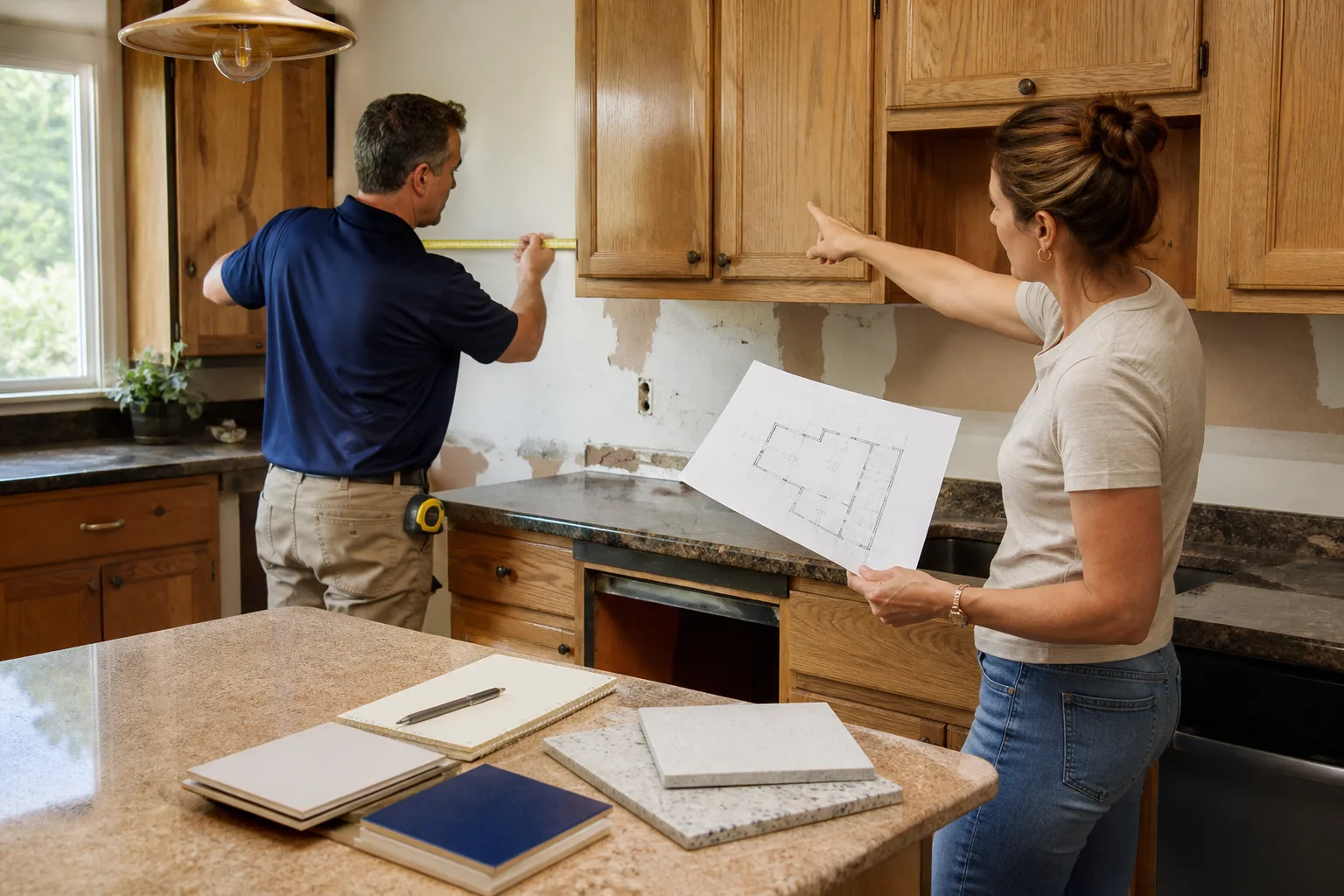
Most DIY guides start with “assess your skill level.” That’s the wrong first question. The right first question in Orlando is “what happens if this fails, and can I prove I did it right?” After that, skill and time matter.
Here is the assessment framework we recommend, in order:
- What is the failure cost? If this work fails in two years, what does the damage cost? A failed paint job costs a repaint. A failed waterproofing installation can cost $8,000 to $15,000 in mold remediation and rebuild in Orlando. If the failure cost exceeds your DIY savings, the math says hire a professional.
- What is the permit and documentation requirement? If the project requires a permit and an inspection trail, and you cannot produce that trail yourself, you are not saving money. You are deferring a cost to the day you sell, refinance, or file a claim.
- What is the time reality? A bathroom remodel that a professional crew completes in 3 to 4 weeks takes a working homeowner 4 to 8 months of nights and weekends. During that time, the bathroom is out of service. Young families in Orlando don’t have a spare bathroom for 6 months. Older adults doing their own plumbing work face genuine safety risks from inadequate tooling and unfamiliar systems.
- What is the skill ceiling for this specific task? Painting a room and installing a Schlueter waterproofing system are not the same project category. Be honest about where this task sits. Hanging drywall is learnable. Floating a shower pan with correct slope is a skilled trade that takes practice to do right.
- What is your tolerance for imperfection? DIY finish work shows. Trim that’s close but not tight, tile that’s slightly uneven, paint lines that aren’t crisp. Some Orlando homeowners are fine with that in a guest room and not fine with it in a primary bath. Know your own standard before you start.
We’ve met Orlando homeowners who did their own work well and were proud of it. And we’ve met homeowners who spent months and thousands of dollars and then paid us to tear out and redo the result. The difference was rarely raw intelligence. It was time availability, the specific task’s complexity, and whether they understood Orlando’s permit and climate requirements before they started. For any project on the line, a General Contractor in Orlando can give you an honest read on what the work actually involves.
Which Projects Still Make Financial Sense as DIY
In 2026, the DIY math holds up for a specific set of projects. These are tasks where the materials are forgiving, the failure cost is low, the permit requirement is absent, and the skill ceiling is reachable. Here is the honest list for Orlando homeowners:
- Interior painting. Prep is the work, and prep is learnable. Buy quality paint, use good tape, and take your time. Orlando humidity means you should paint in the morning or use AC, because latex paint applied in high humidity can dry unevenly.
- Basic trim and baseboard installation. Miter cuts take practice but are not dangerous. The material is cheap. Mistakes are recoverable. This is one of the best “build skills” projects for a new DIYer.
- Fixture swaps. Replacing a faucet, a light fixture, a toilet, or a sink basin is within the Florida owner-builder exemption and requires no permit. These swaps are genuinely approachable for careful homeowners.
- Landscaping and non-structural hardscaping. Planting, mulching, and small paver paths are DIY-appropriate. Larger paver projects with retaining walls cross into structural territory and need engineering in many Orlando soil conditions, which are sandy and fast-draining.
- Cosmetic kitchen updates. Cabinet hardware, backsplash tile over existing drywall in a dry area, and open-shelf installation all fall into realistic DIY territory. The moment you’re moving plumbing or electrical, the project shifts categories.
- Ceiling fan installation where a fixture exists. If the box is rated and the wiring exists, this is a realistic swap. New wiring to a new location is not DIY under Florida law.
These projects share common traits: no permit required, no waterproofing envelope, no structural or life-safety system, and failure does not cause cascading damage. That’s the line. When a project crosses any of those thresholds, the math changes.
Which Projects the Math No Longer Supports as DIY
Here is the harder truth. In Orlando in 2026, there are projects that even experienced homeowners should not do themselves, not because they can’t be done, but because the liability and documentation requirements make the DIY version a negative-value proposition. These projects cross multiple thresholds at once:
- Any bathroom remodel involving shower construction or plumbing movement. The waterproofing requirement in Orlando’s climate, the permit requirement for plumbing changes, and the mold risk on failure put this squarely in professional territory. An Orlando shower that fails is not a cosmetic issue. It’s a mold remediation and insurance event. Bathroom Remodeling in Orlando with licensed work and permitted rough-in costs more up front and vastly less over time.
- Electrical panel work. Florida law prohibits it for unlicensed persons. The fire risk is real. The insurance gap is severe. There is no defensible DIY version of this project.
- Load-bearing wall removal or structural changes. Orlando homes built before the 2002 Florida Building Code often have structural systems that do not match modern assumptions. An engineer’s assessment is required, and the work must be done by licensed professionals with permits and inspections.
- Roof replacement or significant roof repair. This is a wind-load structural system in Orlando, not a covering. Insurance implications, permit requirements, and working-at-height safety all argue decisively against DIY. We will not soften this one: a roof is not a homeowner project in Florida.
- Slab foundation work. Orlando’s sandy soils and high water table create specific foundation behaviors. This is beyond even licensed general contractors; it requires foundation specialists and engineers. DIY attempts here create problems worse than the original issue.
- Gas appliance installation or line modification. Prohibited. The end. The safety risk to the home and occupants is not worth any savings.
- Whole-home remodeling. Coordinating the permit process, the sub-trades, the inspections, the material deliveries, and the sequence of work is a full-time job. A DIYer attempting this while working another job will take 2 to 3 years to complete what a licensed Orlando contractor completes in 6 to 9 months.
Common Mistakes to Avoid
- Buying materials before checking HOA approval. Orlando HOAs regularly reject specific products or colors, and you cannot return special-ordered materials. Check your architectural guidelines before spending a dollar.
- Assuming the owner-builder exemption covers everything. Florida’s exemption is limited to your primary residence and requires you to actually live there. It also has a one-year sale restriction. Orlando’s active market means this restriction matters.
- Skipping the permit because “it’s just a small project.” Orange County code enforcement does not distinguish between a small unpermitted project and a large one at point of discovery. The fine structure and the remediation requirement both apply regardless of scope.
- Using improper waterproofing in wet areas. Green board is not a waterproofing system. Cement board is not waterproof by itself. In Orlando’s climate, this mistake shows up as mold within two years. Use a proper membrane system designed for the application.
- Undervaluing your own time. A bathroom remodel that takes an amateur 6 months of weekends has a real cost: lost use of the space, stress on the household, and the many small re-dos that come with learning on the job. Your time has a market value. Include it in the calc.
- Doing electrical work without a licensed electrician to “save a few hundred dollars.” The fire risk, the insurance denial risk, and the resale disclosure issue compound into a loss far exceeding any savings. There is no small electrical project that skips the licensed professional safely.
- Starting demolition before securing permits and contractor availability. An Orlando homeowner who tears out the only bathroom and then discovers the permit will take three weeks and the plumber is booked for two months lives in a construction zone indefinitely. Sequence the planning before the demo, not after.
When to Call a Professional
Call a professional when the project touches plumbing rough-in, electrical panel work, structural changes, waterproofing envelopes, gas lines, or roofing. Call a professional when the project requires a permit you cannot pull as an owner-builder, or when the HOA demands licensed work. Call a professional when the failure cost of doing it wrong exceeds the savings of doing it yourself. And call a professional when you’ll be sleeping better knowing there’s a written price, a written guarantee, and a documented inspection trail. Mason Remodeling Co Orlando offers free estimates in Orlando. Call (850) 920-7745 to schedule one.
Frequently Asked Questions
A standard bathroom remodel in Orlando typically costs $18,000 to $35,000, with larger primary baths running $35,000 to $60,000 or more depending on finishes and structural changes. The range depends on scope, material tier, and whether plumbing moves. Call (850) 920-7745 for an exact written quote, which we provide before any work begins.
Yes, Florida law allows an owner-builder to act as their own contractor on their primary residence, but the work requiring permits must still be performed by licensed subcontractors for plumbing, electrical, and structural trades. You cannot legally perform those trades yourself, and the owner-builder exemption expires if you sell within one year. In practice, many Orlando homeowners find that acting as their own GC for a kitchen or bath remodel adds months of coordination and introduces sequencing risks that a licensed General Contractor in Orlando handles as a matter of daily work.
Unpermitted work surfaces during the sale process in three ways: the buyer’s inspection flags it, the appraisal identifies the discrepancy between square footage and permit records, or the title company discovers it during lien and record review. In each case, the typical outcome is that the seller pays to bring the work to code, open walls for inspection, or reduce the sale price. Orlando’s active market means buyers have leverage to demand these remedies.
Yes, for cosmetic finish work that requires no permit, no waterproofing envelope, and no structural or life-safety involvement. Interior painting, trim, fixture swaps, and basic landscaping all remain solid DIY projects with good return on effort. The line is clear: once a project touches plumbing rough-in, electrical panel work, structural changes, gas, or roofing, DIY stops making financial sense in Orlando regardless of your skill level.
A licensed Orlando bathroom remodel typically takes 3 to 4 weeks from demo to completion, assuming no structural surprises and permits securing promptly. Larger primary bath projects with custom tile and glass can run 5 to 6 weeks. The permit timeline in Orange County runs 1 to 3 weeks for a typical bath remodel, and that time is factored into the professional schedule.
Insurance coverage depends on what the work was and whether it was permitted. Damage traced to unpermitted plumbing, electrical, structural, or waterproofing work often results in a denied or reduced claim, because the insurer can argue the damage resulted from work that was never inspected or code-verified. Cosmetic DIY work like painting rarely affects coverage. The risk concentrates exactly where DIY is most dangerous: the systems that cause expensive failures.
A written guarantee should state coverage period, what’s covered, and what’s excluded in plain language. Mason Remodeling Co Orlando provides a written guarantee on every project, and our 365-Day Done Right Promise means if the work is not right within a year of completion, we make it right at no cost to you. We also provide a free return visit if a repair or installation fails, with no charge and no dispute process.
The Bottom Line

The DIY-vs-professional decision in Orlando is not about your skill or your confidence. It’s about Florida law, Orlando HOA rules, insurance claim behavior, climate-driven material demands, and the documentation trail that protects your home’s value and your family’s safety. Some projects remain genuinely sensible as DIY. Many of the ones that look like savings are actually deferred costs with interest. When in doubt, get a written price from a licensed contractor before you commit to doing it yourself, or browse our more guides & resources to keep researching. The estimate is free, and the comparison is what protects you.
Mason Remodeling Co Orlando has served Orlando since 2004. We provide written pricing before any work starts, background-checked and identity-verified crews through The Threshold Standard, and a 365-Day Done Right Promise on completed work. Call (850) 920-7745 to schedule a free estimate for your Orlando project.
Written by Isaac Pruett, Owner at Mason Remodeling Co Orlando, serving Orlando since 2004.
See the difference
 Before
 After
After Before
 After
After Before
 After
After